Save 10% on Qualifying Projects
Build, Repair, and Restore With Masonry Services in Eagle River, AK
Masonry can be incorporated into residential and commercial properties for structural and other qualifying construction applications. Masonry services in Eagle River, AK, can address new masonry construction as well as masonry repair and restoration for existing work. The appropriate approach depends on the structure, materials, condition, and scope of the project.
New masonry construction requires planning around dimensions, placement, surrounding materials, and the broader construction plan. Custom masonry can be coordinated with concrete, foundations, additions, and other building work when masonry is part of the project.
Existing masonry may require a different approach. Visible damage, deterioration, or worn areas can create a need for masonry repair. Masonry restoration can address qualifying existing work when the goal is to renew affected portions while accounting for surrounding masonry that remains in place.
Structural masonry requires particular attention to how the masonry relates to the construction around it. Residential masonry and commercial masonry projects can differ in scale and configuration, making project-specific planning important.
Whether the project involves new construction or existing masonry, careful attention to layout, materials, transitions, and adjacent surfaces helps keep the work aligned with the property. A clearly defined scope can determine whether the project calls for new masonry, focused repairs, restoration, or masonry coordinated with other construction.
Plan Masonry Construction Around the Property and Project Scope
Masonry construction should begin with a clear understanding of where the work will be located and how it relates to the rest of the project. Dimensions, surrounding materials, concrete components, and nearby construction can all influence how the masonry is planned.
Masonry work may include:
- New masonry construction.
- Masonry repair.
- Masonry restoration.
- Structural masonry.
- Residential masonry.
- Commercial masonry.
- Custom masonry.
- Masonry coordinated with concrete work.
- Masonry incorporated into new construction.
- Masonry included in additions.
- Repair of qualifying damaged areas.
- Restoration of qualifying existing masonry.
New construction allows masonry to be planned alongside other building components from the beginning. The dimensions and placement can be coordinated with the broader construction layout so the masonry fits the intended area.
Residential masonry may be included in new homes, additions, remodeling, or other qualifying property improvements. The exact application should be determined by the project plan and the area where masonry is needed.
Commercial masonry can involve different dimensions or construction requirements depending on the property. As with residential work, the masonry should correspond with the specific project rather than relying on a standard approach.
Custom masonry is useful when the dimensions or configuration require work planned for a particular space. Existing walls, concrete surfaces, structural components, and other permanent features may influence how the masonry is laid out.
Concrete and masonry can also appear within the same project. Foundation construction, concrete slabs, or other concrete components may sit near or connect with masonry work. Planning these materials together can help establish clear transitions.
Structural masonry should be coordinated with the building plan and surrounding construction. The location and configuration of the masonry need to reflect the role it serves within the project.
Careful planning also helps define the amount of work involved. A focused masonry project has different requirements from a larger installation incorporated into new construction or a commercial renovation.
By identifying the intended application, dimensions, materials, and surrounding construction before work begins, masonry construction can become a coordinated part of the property rather than an isolated element.
Address Existing Masonry With Focused Repair and Restoration
Existing masonry can change over time as individual areas experience wear, damage, or deterioration. When visible problems appear, masonry repair can focus on the affected portions and determine how new work should transition into surrounding materials.
Masonry repair is not necessarily the same as masonry restoration. Repair generally focuses on addressing specific damaged areas, while restoration may involve a broader effort to renew qualifying existing masonry. The appropriate scope depends on the condition and goals of the project.
A focused repair project may involve one affected area rather than the entire masonry installation. Identifying the location and extent of visible damage can help determine how much work needs to be addressed.
Masonry restoration can be considered when multiple areas require attention or when an existing masonry feature needs a more coordinated update. Restoration should still account for the condition of surrounding materials and any portions that will remain.
Matching new work with existing masonry can require careful consideration. Older and newer materials may differ in appearance, condition, or other visible characteristics. The project should account for these transitions rather than assuming repaired areas will be indistinguishable from older masonry.
Residential masonry repair may be incorporated into a broader renovation when other portions of the property are also being updated. Coordinating masonry with nearby concrete, carpentry, or other construction can help keep the project organized.
Commercial masonry repair can similarly be completed as a focused project or part of a larger commercial renovation. The scale and location of the work should determine the appropriate scope.
Structural masonry may require a different level of planning from masonry used for other purposes. When the masonry relates to structural construction, the project should reflect the role of the affected area and the surrounding building components.
Restoration work should also consider nearby surfaces. Concrete, foundations, walls, and other materials may meet the masonry at different points. Repairs need to fit within these existing conditions.
Not every masonry issue requires replacement of a large area. When damage is isolated, targeted masonry repair may provide a more focused scope. When deterioration affects broader portions, masonry restoration or more extensive work may be considered.
The objective is to address the actual condition of the existing masonry. By evaluating where damage is present and how affected areas connect with surrounding materials, repair and restoration can be planned around the needs of the property.
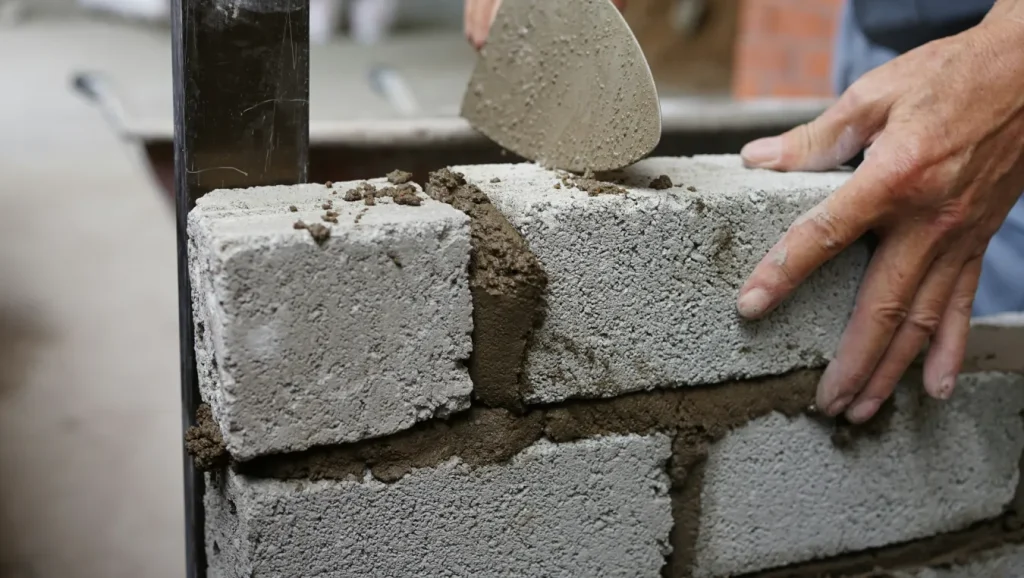
Coordinate Residential, Commercial, and Structural Masonry Work
Masonry can appear in a variety of construction settings, and the project should reflect the specific property where the work is being completed. Residential masonry, commercial masonry, and structural masonry may share common materials and construction methods, but their dimensions and applications can vary.
Residential masonry may be incorporated into new construction, additions, remodeling, or repairs. The masonry should fit the scale and configuration of the home while coordinating with nearby materials.
When masonry is included in a home addition, it may need to relate to both new and existing construction. Dimensions, placement, and visible transitions should be considered as the addition takes shape.
New home construction can provide more flexibility because masonry components can be included in the project plan from the beginning. Their placement can be coordinated with concrete foundation construction and other building work where appropriate.
Commercial masonry projects may involve new construction, renovation, repair, or restoration. The scale of the property can influence the amount and configuration of the masonry work, making a clearly defined scope important before construction begins.
Structural masonry should be planned in relation to the broader structure. Its placement and configuration should follow the project requirements and coordinate with adjoining construction.
Concrete work can be closely related to masonry in some projects. A concrete foundation may establish the base for other construction, while additional concrete surfaces can meet masonry in other areas. Coordinating these materials helps define where one component ends and another begins.
Custom masonry can address projects where standard dimensions or layouts do not suit the available area. The work can be planned around the actual configuration of the property and surrounding construction.
Existing properties introduce additional considerations. Masonry repair or restoration may need to work around materials that will remain in place. The condition and appearance of those existing areas should be considered when determining the repair scope.
A larger remodeling project may also involve masonry alongside carpentry, concrete installation, tile, or other construction. Planning the sequence can help prevent individual portions of the project from conflicting with one another.
The same principle applies to commercial renovations. Masonry should be coordinated with the construction plan and completed according to the intended area rather than treated as a separate feature without regard for adjoining work.
Material transitions deserve attention throughout these projects. Masonry may meet concrete, wood construction, tile, or other surfaces depending on the property. Clear transitions help define the completed work and contribute to a more consistent finished appearance.
Masonry construction, repair, and restoration each require a different approach, but all benefit from planning based on the actual project. New work should correspond with the intended dimensions and surrounding construction. Repairs should focus on affected areas. Restoration should account for the broader condition of the existing masonry.
Whether the project involves residential masonry, commercial masonry, structural masonry, or custom masonry, the work should be organized around its purpose within the property. Thoughtful planning helps determine the appropriate scope while coordinating masonry with the materials and construction around it.

Get $500 Toward Your Remodel
Receive a $500 project credit on qualifying kitchen or bathroom remodeling projects of $15,000 or more. Ask us about the promotion when discussing your plans.
Frequently Asked Questions About Masonry Services
-
Masonry work may include new masonry construction, masonry repair, masonry restoration, structural masonry, custom masonry, and qualifying residential or commercial projects.
-
Masonry repair generally focuses on specific damaged or deteriorated areas. Masonry restoration may involve a broader scope intended to renew multiple qualifying portions of existing masonry.
-
Yes. Masonry construction can be incorporated into qualifying new homes, additions, commercial construction, and other building projects when it is included in the project plan.
-
Yes. Masonry can be coordinated with concrete foundations, slabs, and other qualifying concrete work when both materials are included in the construction scope.
-
In some projects, masonry repair can focus on selected damaged areas while suitable surrounding masonry remains in place. The appropriate scope depends on the condition and extent of the affected areas.